

Who are we?
Crosscultureel BV is a not-for-profit company: the income generated by delivering services to
paying customers is used to assist less well-off clients pro bono. The company assists
minority groups in the Global North, communities in the Global South, and individual
members of these groups in realizing their human rights.
The company takes the view that no culture is superior to another. It considers human rights
to be universal in the sense that everyone is entitled to them, regardless of race, gender,
ethnicity, religion and culture: nobody is required to pass a test as a condition for enjoying
them. Human rights may be protected through formal institutions, such as legislation and
courts, or informal institutions, such as culture or religion. According to international law it is
up to the members of a particular society or community to decide which of these
mechanisms they prefer.
The lens used by staff of the company is cross-cultural. Every act or object is studied within
its cultural context in light of its rationale. A concept will be translated from the source
culture into the target culture in terms that make sense to those who are part of the target
culture (vernacularization). Employees of the company have extensive human rights
experience in the Global South.
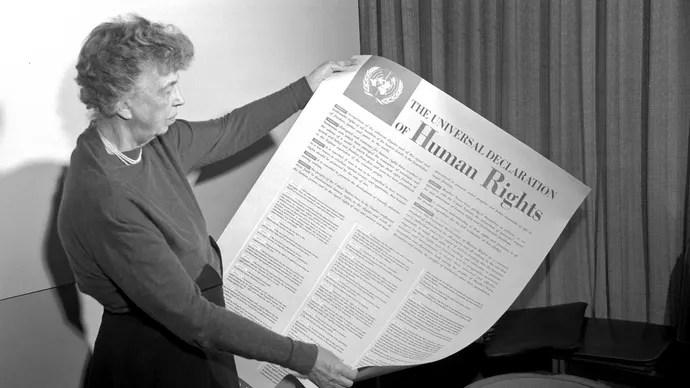
Thus, they have been working on human rights in China for more than 20 years. Together
with Chinese experts they have conducted a campaign to increase awareness of and support
for the Universal Declaration of Human Rights, which, although it is binding on China, did not
receive much attention there. This lack of attention does not match its importance. Although China has acceded to many international human rights instruments, it has signed but not yet ratified the International Covenant on Civil and Political Rights. This means that the list of civil and political rights in the Universal Declaration is the only relevant international instrument of this kind applicable to China. The campaign, which highlighted the major role played by the Chinese delegate, Zhang Peng Chun, in drafting the document, was very
successful, since strong political commitment to the Universal Declaration has emerged as a result.

In Kenya, Crosscultureel BV is partnering with the Siaya Education Project, a youth-led,
women-led non-profit in Siaya County, Kenia to combat corporal punishment in schools.
Although administering corporal punishment has been banned through legislation, teachers
still very often resort to it, since order in the classroom is often undermined by students who
are under the influence of drugs or alcohol. As part of this project so-called ‘age sets’ have
been revived. These are groups of boys or girls of the same age, which they enter into
around age 12 – 14. The members of these age sets keep each other on the straight and
narrow through peer influence. The age sets are being mobilized to ensure that the students
behave themselves properly in class, which avoids sanctions having to be applied. The
initiative has been welcomed by pupils and teachers alike, and the first signs are very
promising.

In The Netherlands, Crosscultureel BV assists organizations within the Muslim and Asian
communities in representing their interests. Both communities are facing much racism and
discrimination. As a consequence, the company is assisting Islamic schools and mosques in
The Netherlands in designing their civic education. The curriculum is based on the position
that Islam serves as an engine for citizenship. This is the case since under Islam Muslims
residing in countries where it is a minority religion are expected to respect the government,
abide by the laws and fit into society (aman), in exchange for freedom of religion.
Consequently, at schools and in mosques Islam and citizenship go hand in hand.
The restaurant sector is very important to the Asian community, since it does not only
provide employment and income to many of its members, but also serves as a celebration of
its culture and spirituality. Due to very restrictive immigration policies, it has become very
difficult for Asian restaurants to recruit chefs in Asia which are schooled in Asian cuisine. This
has resulted in a lack of qualified personnel and the closure of a number of restaurants.
Together with the Asian restaurant sector, Crosscultureel BV is lobbying politicians and
acting in the courts to relax the restrictive rules.
Together with companies in the Global South, Crosscultureel BV has set up the Fair ESG
Initiative or FESGI in 2024. See page Fair ESG Initiative on this website.
 Crosscultureel